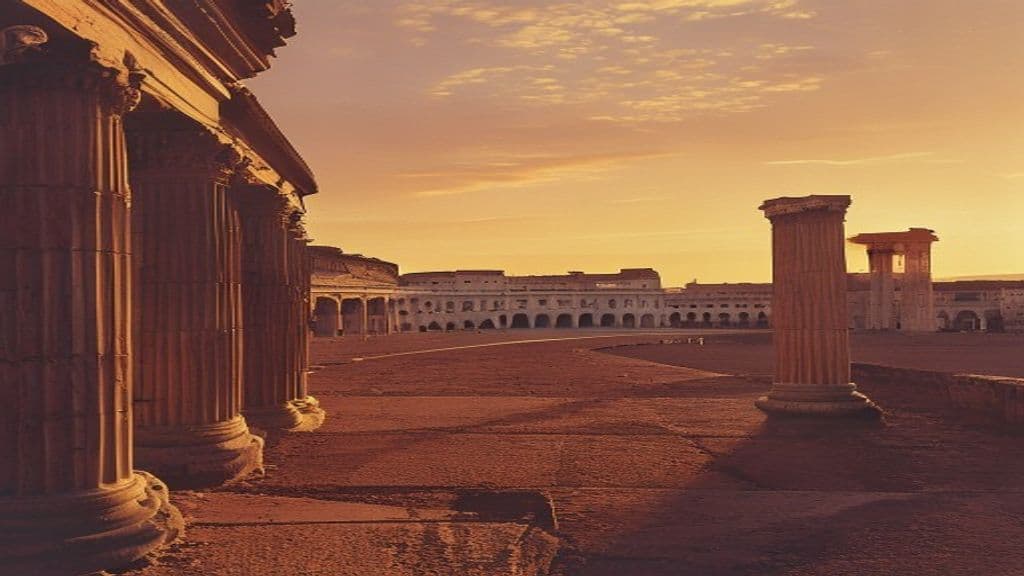
Roman Forum and Palatine Hill
The heart of ancient Rome
Address
Via Sacra, 00186 Roma RM
Opening hours
Lun–Dom 9:00–19:00 (stesso biglietto Colosseo)
Tickets
Incluso nel biglietto Colosseo (€18)
Official website
www.coopculture.itThe Roman Forum was the political, religious and commercial centre of ancient Rome. The Palatine Hill, included in the same ticket as the Colosseum, is the oldest of Rome's seven hills.
General Guide
Roman Forum in a Day: With the Palatine and Surroundings
A full day dedicated to the Roman Forum and Palatine Hill allows you to explore the entire complex without rushing, understand the historical layers, and include areas often skipped on quick visits. This itinerary organises the day into three blocks — morning, afternoon, late afternoon — with practical guidance on timing, tickets, and logistics.
Roman Forum in 45 Minutes: The Essential Route
Short on time but still want to experience the Roman Forum? This 45-minute route selects the five unmissable monuments, gives you the logical order to visit them without wasting steps, and explains what to look for at each. Designed for visitors arriving with a combined ticket and a limited time window.
Roman Forum at Sunset: Golden Light Over the Ruins
The Roman Forum at sunset is a different experience from a mid-morning visit: raking light brings out the texture of the stones, the travertine columns turn amber, the porticoes cast long shadows. This practical guide explains how to plan a late-afternoon visit to make the most of the light — with opening times, positioning advice, and photography tips.
The Column of Phocas: The Last Monument of the Roman Forum
Erected in 608 AD, the Column of Phocas is the last monument added to the Roman Forum in antiquity. A single reused Corinthian column, without architectural context, planted amid the ruins of a declining empire: the story of this small reuse monument tells of the end of the Roman world, the poetry of the fragment, and the long medieval oblivion.
The Imperial Fora: Complete Guide to Rome's Five Forums
Between 46 BC and 112 AD, five Roman emperors built a system of monumental squares to the north of the Roman Forum that permanently reshaped the centre of Rome. This article is a panoramic guide to the five Imperial Fora — Caesar, Augustus, Vespasian, Nerva, Trajan — with history, architecture, current state and practical visiting information.
Arch of Septimius Severus: Triumph and Erased Memory
The Arch of Septimius Severus is one of the most complex monuments in the Roman Forum: erected in 203 AD to celebrate the Parthian victories of the emperor and his sons, it still bears visible signs of one of antiquity's most dramatic acts of memory erasure. This article examines the history, architecture, reliefs, and the mysterious gap in the inscription — testimony to an imperial fratricide.
Forums of Caesar and Augustus: Birth of the Imperial Fora
The Forum of Caesar and the Forum of Augustus mark a fundamental turning point in the urban history of Rome: for the first time, a civic space was not built by the community but by a single man who used his own name to redefine the centre of the world. This article analyses the two imperial squares — their history, architecture, temples, and political iconography — in the context of their construction and their legacy.
Rostra and Curia Iulia: Power and Speech in the Forum
The Rostra and Curia Iulia are the two focal points of political activity in the Roman Forum: the first is the speakers' platform, the place of public speech; the second is the home of the Senate, the deliberative chamber of the ancient world. Together they define the heart of the Roman republican and imperial system. This article analyses their history, architecture, transformations over time, and political significance.
Roman Forum with Children: Practical Family Guide
Bringing children to the Roman Forum is entirely possible and can be a remarkable experience, provided you plan ahead. The site has uneven ground, little shade, and large distances to cover, but it also has incredible stories to tell. This guide helps parents organise an effective visit: what to see, how to explain it to children, what to bring, how long to allow, and how to bring the Forum to life even for the youngest visitors.
Roman Forum: Tickets and Prices 2025
How many ticket options exist for the Roman Forum? How much do they cost? Where do you buy them? When is it free? This guide answers every question about tickets for the Roman Forum, Colosseum, and Palatine, with up-to-date prices, booking options, and tips for saving time and money.
How to Visit the Roman Forum: Complete Practical Guide
The Roman Forum is one of the most important archaeological sites in the world, but also one of the most complex to navigate independently. This practical guide answers the essential questions: how to enter, what to pay, how long to allow, what to see first, how to get around the site. Up-to-date information for organising an effective visit.
The Palace of Domitian: the definitive imperial residence
The Palace of Domitian, designed by the architect Rabirius and completed around 92 AD, redefined the meaning of Roman imperial architecture for ever. For the first time, an entire urban hill was transformed into a single palatine platform uniting public, private, service, and recreational spaces in a coherent system. All subsequent emperors until the fall of Constantinople lived in the same complex or extended its structures. This article analyses Rabirius's design, the function of each section, the materials used, the political iconography, and the current state of the site.
House of Augustus and House of Livia: Palatine Frescoes
The House of Augustus and the House of Livia preserve the most extraordinary in situ frescoes in all of Imperial Rome. Painted around 30–20 BC in the Second Pompeian Style, their walls offer illusionistic colonnades, fantastical gardens, theatrical masks, and architectural vistas of breathtaking quality. This article traces the history of both residences — their acquisition, the patrons, the painting technique, and the content of individual rooms — and explains why these modest spaces constitute one of the least-known yet most exceptional treasures of Roman archaeology.
The Palatine Hill: History of the Imperial Hill
The Palatine is the oldest of Rome's seven hills: Iron Age huts from the eighth century BC found here are identified by tradition with the city's founding, and it was here that successive emperors built their imposing overlapping palaces, from Augustus's modest apartment to Domitian's titanic complex. The hill's very name gave rise to the word "palace" in all Romance languages and beyond. This article reconstructs the history of the Palatine from Rome's foundation to the eighteenth century, examining successive phases of occupation, the imperial palaces, the current landscape, and the finds preserved in the Palatine Museum.
Via Sacra: Rome's Oldest Road
The Via Sacra runs through the Roman Forum for approximately 500 metres, linking the Capitoline Hill to the Arch of Titus and beyond to the Colosseum. It was Rome's most sacred street, walked by triumphal processions of victorious generals, imperial funeral cortèges, and citizens making their way to the Forum's principal shrines. This article traces the Via Sacra's history from Rome's foundations to the Middle Ages, describes the monuments lining its route, and examines the political and religious significance of each procession that passed along it.
Basilica of Maxentius: the Largest Building in the Forum
The three surviving arcades of the Basilica of Maxentius are among the most imposing structures in the Roman Forum. The building, begun in 306 AD and completed by Constantine in 312 AD, was the largest civic hall in Rome: 80 × 100 metres, with groin vaults reaching 35 metres in height. This article tells its history, the revolutionary construction technique and its impact on European architecture.
Temple of Vesta and Vestal Virgins: Sacred Fire History
The Temple of Vesta was the only circular temple in the Roman Forum and housed Rome's sacred fire — the flame that, according to tradition, could never be extinguished. The Vestals, six priestesses who served for thirty years, were among the most powerful and most constrained figures of Roman society. This article tells the history of the temple, the role of the Vestals and the cosmic meaning of the sacred fire.
Temple of Saturn: History of Rome's Treasury
The eight columns of the Temple of Saturn are among the most recognisable images of the Roman Forum. The temple, one of the oldest in Rome, housed the Roman state treasury for over a thousand years. This article tells the history of Saturn, his temple, the Saturnalia — the most important popular festival of Rome — and the economic significance of the sanctuary.
Arch of Titus: History of Rome's Most Important Triumphal Arch
The Arch of Titus, erected in 81 AD after the emperor's death, commemorates the conquest of Judea and the destruction of the Temple of Jerusalem in 70 AD. The interior panels — showing the Menorah carried in triumph and the imperial chariot — are the most significant surviving representations of the fall of the Second Temple. This article tells the history of the arch, the meaning of the reliefs and its legacy across the centuries.
Roman Forum: Complete History of Ancient Rome's Centre
For nearly a thousand years, the Roman Forum was the political, religious and commercial centre of Rome. Senators and emperors, laws and triumphs, trials and sacrifices: everything passed through this space. This article tells the entire history of the Forum — from the prehistoric marsh to medieval abandonment — and describes what remains visible today.
Reach Roman Forum and Palatine Hill in style
Private NCC driver for transfers, day tours and airport connections. Professional service from €65.