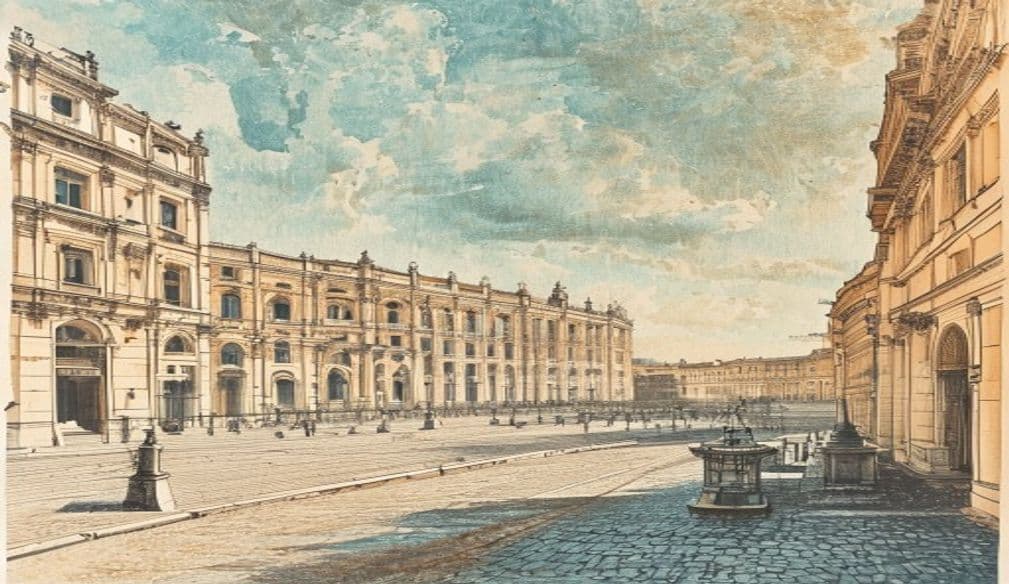
Light is everything
Piazza Navona changes radically throughout the day. The same fountain photographed at 2:00 pm in August and at 7:00 pm in October are two entirely different subjects. Before any technical consideration, time of day is the variable that determines the result.
Golden hour: one hour before sunset. In summer this falls around 7:30–8:00 pm, in winter around 4:00–4:30 pm. Raking light accentuates the sculptural reliefs of Bernini, casts dramatic shadows across the faces of the river gods and turns the travertine a warm orange.
Blue hour: the 20–30 minutes after sunset, when the sky deepens to cobalt and the surrounding lights come on. The contrast between sky and illuminated fountain is the most photographed moment of the day. With wet pavement after rain, reflections multiply the effect.
Early morning: from 7:00 to 9:00. The square is almost empty, the light soft and diffused. Ideal for clean compositions without crowds.
Shooting positions
East side — Corso del Rinascimento: looking from the main road gives the most classic overall view. The Fountain of the Four Rivers rises at the centre with Sant'Agnese's façade behind. A wide-angle lens (16–24 mm) allows both ends to be included.
South end: the Fontana del Moro is more contained, suited to medium focal lengths (50–85 mm). From here you frame the figure of the Moor with the dolphin against Palazzo Pamphilj.
North end: the Fontana di Nettuno lends itself to frontal shooting at 50 mm. The sea-monster figures stand out well in side light.
Ground level, low angles: crouching near the outer edge of the Four Rivers basin and shooting upward emphasises the verticality of the obelisk and the sculptural group. Effective with both DSLR and smartphone.
West side — Via dell'Anima: a less common perspective, with the building façades framing the fountain.
Recommended focal lengths
| Subject | Recommended focal length |
|---|---|
| Overall view of the square | 16–24 mm |
| Fountain with Sant'Agnese façade | 24–35 mm |
| Sculptural details | 85–135 mm |
| Portraits of artists and vendors | 50–85 mm |
| Obelisk from below | 16–20 mm |
Smartphone
A good smartphone produces more than satisfying results if two rules are followed: never use digital zoom (move closer physically instead of zooming in) and shoot in RAW or Pro mode if the app supports it, for post-processing flexibility. In blue hour, use night mode or manually lower the ISO.
Tripod
A tripod is permitted in the public square without special authorisation for personal use. Commercial or professional shoots with a crew require a permit from the local authority. In practice, no one stops an amateur photographer with a tripod.
Drones
Drones are prohibited in the historic centre of Rome. There are no exceptions for Piazza Navona. Fines are substantial.
Churches and interiors
When photographing Sant'Agnese in Agone or other nearby churches, check the house rules (flash often forbidden, photography sometimes prohibited entirely). The square outside has no restrictions.
Christmas market
December is one of the best months to photograph the square. Illuminated stalls, festive lights and children moving among the rides create scenes of great vibrancy. In the evenings after 6:00 pm the square becomes a stage of warm light.
With a private driver
Arrive at Piazza Navona with a private driver. From your hotel, airport or station — direct and on time. Service from €49. → Book at myromedriver.com
Frequently asked questions
What is the best time to photograph without crowds? From 7:00 to 9:00, especially on weekdays. In summer the square fills up by 9:30.
Are the fountain lights always on at night? The Fountain of the Four Rivers is illuminated every evening, generally until midnight. There are no officially published times: it may vary.
Can I sell photographs of Piazza Navona? The square is public: photographs for editorial use require no permits. For commercial use involving recognisable brands or people, standard privacy and intellectual property regulations apply.