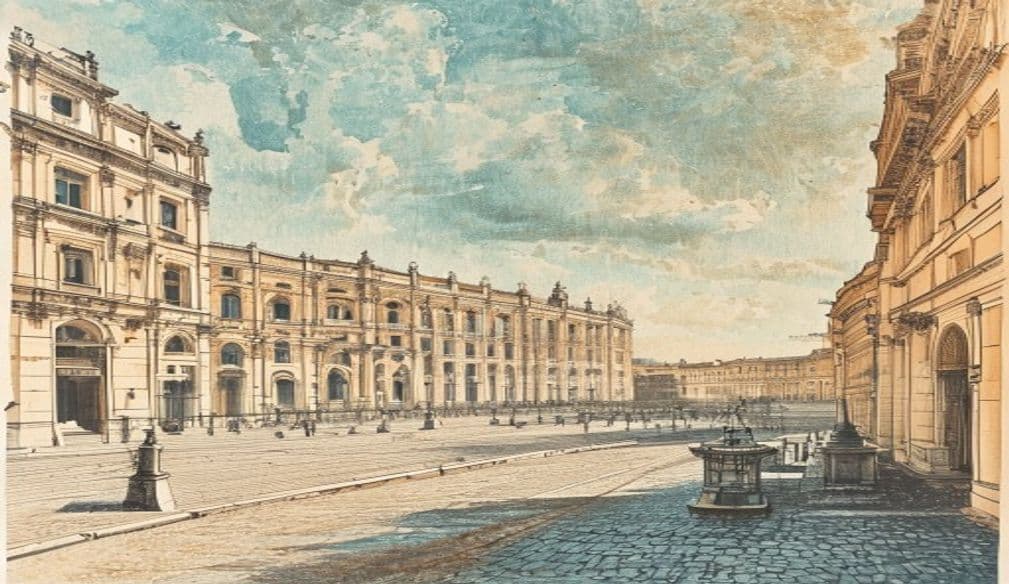
Prima della piazza: lo Stadio di Domiziano
La forma allungata e ovale di Piazza Navona non è casuale. Deriva direttamente dallo Stadio di Domiziano, costruito nel 86 d.C. per ospitare i ludi graeci, i giochi atletici di tradizione greca. Lo stadio era lungo circa 265 metri, capace di 30.000 spettatori, uno dei più grandi di Roma.
Dopo la fine dell'uso sportivo, nel V–VI secolo, le strutture rimasero in piedi e cominciarono ad essere inglobate nei nuovi edifici medievali. La spina dello stadio divenne la spina della piazza.
Il Medioevo: mercato e rione
Nel Medioevo il nome della zona era in agone (dallo stadio). Per una trasformazione fonetica popolare, in agone divenne prima nagone poi navone, da cui Navona. Il mercato si teneva qui almeno dal XIII secolo.
La piazza medievale era ben diversa da quella attuale: senza fontane monumentali, circondata da edifici irregolari, spesso fangosa e rumorosa. Era uno spazio funzionale, non celebrativo.
Il Rinascimento: il rione dei Pamphilj e di altri casati
Nel Quattrocento e Cinquecento, diverse famiglie nobili acquisirono proprietà attorno alla piazza. I Pamphilj ne divennero i possessori più importanti, ma erano presenti anche i Braschi (che avrebbero costruito il Palazzo Braschi, oggi Museo di Roma, nell'angolo sud-est) e altri.
La piazza era già un luogo di rappresentanza, ma la grande trasformazione barocca doveva ancora venire.
Il pontificato di Innocenzo X (1644–1655): la trasformazione decisiva
Con l'elezione di Giambattista Pamphilj come papa Innocenzo X nel 1644, la piazza divenne il palcoscenico di una delle più ambiziose operazioni urbanistiche del barocco romano.
In meno di dieci anni, tra il 1644 e il 1655, il papa commissionò o avviò:
- La costruzione del Palazzo Pamphilj (1644–1646, Girolamo Rainaldi), che diede alla piazza il suo lungo fronte occidentale
- La costruzione della Fontana dei Quattro Fiumi (1648–1651, Gian Lorenzo Bernini), il pezzo centrale dell'intera composizione
- La ricostruzione della chiesa di Sant'Agnese in Agone (1652 avvio, poi Borromini dal 1653), che completò il lato con la facciata concava
Queste tre operazioni sono interdipendenti e concepite come un unico progetto di affermazione della gloria della famiglia Pamphilj.
Bernini e la Fontana dei Quattro Fiumi (1648–1651)
La commissione alla Fontana dei Quattro Fiumi è uno degli episodi più raccontati del barocco. Innocenzo X aveva inizialmente preferito un altro progetto, ma Bernini riuscì a far pervenire al papa un modello d'argento attraverso la mediazione di Olimpia Maidalchini, cognata del pontefice.
La fontana fu inaugurata il 12 giugno 1651. Raffigura i quattro grandi fiumi del mondo conosciuto: il Nilo (Africa), il Gange (Asia), il Danubio (Europa), il Rio de la Plata (Americhe). Al centro, un obelisco romano del III secolo d.C., originariamente collocato nel Circo di Massenzio sulla Via Appia.
Le fontane minori
Le due fontane alle estremità della piazza — il Fontana del Moro (a sud) e il Fontana di Nettuno (a nord) — esistevano già prima dell'intervento di Innocenzo X. La prima fu ampliata da Giacomo della Porta nel 1575; la figura del Moro fu aggiunta da Bernini nel 1653. Il Fontana di Nettuno ricevette il gruppo scultoreo centrale solo nell'Ottocento (1873), su progetto di Antonio della Bitta.
Dal Seicento a oggi
Dopo la morte di Innocenzo X nel 1655, la piazza rimase sostanzialmente immutata nella sua struttura. Il mercato continuò ad essere tenuto qui fino all'Ottocento. Nel XIX secolo alcune case addossate alle strutture dello stadio furono demolite, rendendo più visibile la forma ovale. La piazza fu pedonalizzata nel XX secolo, raggiungendo la configurazione che ha oggi.
Con motorista privado
Arrivare a Piazza Navona con autista privato. Dal tuo hotel, aeroporto o stazione — diretto e puntuale. Servizio da 49 €. → Prenota su myromedriver.com
Domande frequenti
Quando fu pedonalizzata Piazza Navona? La piazza fu chiusa al traffico nella seconda metà del XX secolo, in modo graduale. La configurazione completamente pedonale è degli anni Settanta-Ottanta.
Il mercato è ancora presente? Non il mercato permanente. Rimane la tradizione del Mercato di Natale in dicembre. Per il resto dell'anno, i banchi di artisti e rivenditori presenti sono un'eco commerciale del mercato storico, non un mercato regolare.
La trasformazione medievale e rinascimentale
Dopo la caduta dell'Impero Romano lo Stadio di Domiziano rimase come conca naturale nel tessuto urbano. Nel Medioevo si chiamava in Agone (poi storpiato in Navona) e fu riutilizzato per mercati, feste popolari e persino per le cosiddette "navate" — forse battelli navigabili durante le inondazioni del Tevere che invadevano la piazza.
Nel Rinascimento i papi cercarono di nobilitare la piazza: Sisto IV (1471) la scelse come sede del mercato cittadino. Ma fu con Innocenzo X Pamphilj (pontificato 1644–1655) che la vera trasformazione barocca ebbe luogo: commissione della nuova fontana a Bernini, costruzione del Palazzo Pamphilj, rifacimento di Sant'Agnese.
L'acqua come strumento politico
La Fontana dei Quattro Fiumi fu possibile perché Innocenzo X investì nella riattivazione dell'Acquedotto Vergine — lo stesso acquedotto romano del 19 a.C. che alimenta ancora oggi la Fontana di Trevi. L'acqua a Piazza Navona non era solo estetica: era una dichiarazione di potere papale sulla città, sulla natura e sulle quattro parti del mondo.
Le battaglie navali
dal XVIII al XIX secolo, nelle domeniche d'agosto la piazza veniva allagata deliberatamente (ostruendo i tombini delle fontane) per simulare battaglie navali e permettere passaggi in carrozza nell'acqua. La tradizione si interruppe definitivamente nel 1866.