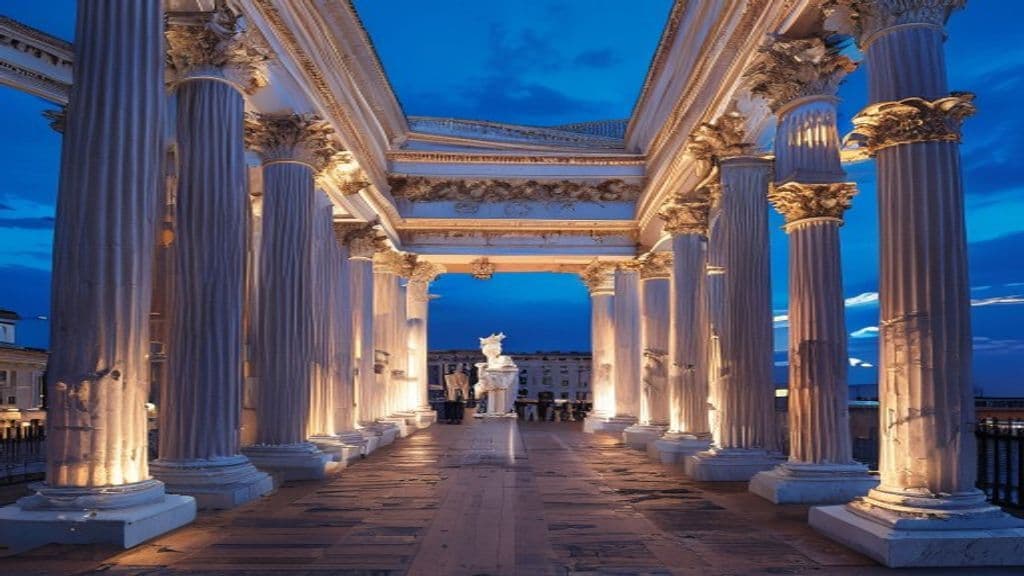
Altar of the Fatherland
The Vittoriano, heart of Italian unification
Address
Piazza Venezia, 00186 Roma RM
Opening hours
Tutti i giorni 9:30–19:30 (ultimo ingresso 18:45) · chiuso 25/12 e 1/1
Tickets
Terrazza €7 (rid. €3,50) · Museo Risorgimento €5 · 1ª dom del mese gratis (giu 2026)
Official website
www.museorisorgimento.itOfficially known as the Vittoriano, the Altar of the Fatherland is the national monument dedicated to Victor Emmanuel II, first king of Italy. The panoramic terrace offers one of the finest views over Rome.
General Guide
Complete Guide to the Vittoriano / Altare della Patria
The Vittoriano is Rome's most controversial and most photographed monument. White, colossal, impossible to ignore, it took more than a century to find its place in the city's identity. This guide brings together everything you need to know to visit it and understand it.
Things to Do Around the Vittoriano
The Vittoriano stands in one of Rome's densest quadrants: within a 15-minute walking radius some of the city's most important sites are clustered together. Visitors to the monument can organise a full day without moving far, combining different histories and periods in a single itinerary.
The Altar of the Fatherland and Victor Emanuel II
The Vittoriano bears the name of Victor Emanuel II, but the king to whom it is dedicated had a personality and a history profoundly different from the monumental building erected in his honour. Understanding who the first king of Italy really was helps explain why the monument was a controversial choice from the laying of the first stone.
Piazza Venezia: History and Architecture
Piazza Venezia is today Rome's archetypal traffic hub, but its current form is the result of demolitions and reconstructions that between the late nineteenth century and the 1930s erased centuries of history to make way for the new capital. The square tells the story of the Rome that was and the Rome that power sought to build.
Accessibility at the Vittoriano
The Vittoriano is one of Rome's monuments with the greatest accessibility provisions, but its historic structure does present some limitations. Knowing in advance which routes are accessible and which are not allows you to plan a visit without surprises.
The Altar of the Fatherland at Night
After sunset, the Vittoriano changes face. Artificial light enhances its whiteness, turning the complex into a beacon visible from much of Rome and revealing sculptural details that daylight tends to flatten. Night is one of the best times to approach the monument.
Guided Tours of the Vittoriano
The Vittoriano is easy to explore independently, but a specialist guide transforms a walk among marble and statues into a reading of unified Italy: symbols become stories, allegories acquire names, and the architecture reveals the political intentions of those who commissioned it.
The Altar of the Fatherland and National Ceremonies
The Vittoriano is not merely a monument to visit: it is the place where the Italian Republic celebrates itself. On specific dates each year, this civic building transforms into a stage for secular rites blending memory, institutional life and public participation.
The Vittoriano in Film and Literature
The Vittoriano has moved through twentieth-century cinema and literature as a symbol of Rome, power and national rhetoric. Its presence in films, novels and popular culture tells a parallel story: that of a monument which struggled to find a shared identity.
The Vittoriano in Contemporary History
From Fascism to the Republic, the Vittoriano has witnessed Italy's twentieth-century political transformations as a stage for ceremonies and propaganda. Understanding this layered history allows one to read the monument not only as a work of architecture but as a mirror of the nation.
Curiosities and Legends of the Vittoriano
Behind the monumental façade of the Vittoriano lie anecdotes, controversies and curiosities that history books rarely recount: from the man who allegedly lived inside the bronze horse, to the nickname that still irritates Romans today, to the lesser-known stories of its construction and the Unknown Soldier.
Photographing the Vittoriano: Angles, Light and Tips
The Vittoriano is one of the most photographed subjects in Rome — and one of the most difficult to capture in an original way. Knowing the best shooting positions, the right light conditions and the less-known details allows you to bring home images that go beyond the standard postcard.
The Altare della Patria with Children
The Vittoriano is one of Rome's most family-friendly monuments: free entry to most areas, wide open spaces, a breathtaking view from the terrace, and the impressive hourly changing of the guard. With the right preparation, it becomes a memorable experience even for the youngest visitors.
The Capitoline Hill and the Area Around the Vittoriano
The Vittoriano stands at one of Rome's most historically dense junctions: within just a few minutes' walk are Michelangelo's Capitoline Hill, the Imperial Fora, the Theatre of Marcellus, the Palazzo Venezia, and the road leading to the Colosseum. An itinerary linking these sites allows you to read two millennia of urban history in less than three hours.
The Central Museum of the Risorgimento at the Vittoriano
Inside the Vittoriano, a museum frequently overlooked by tourists holds the most significant documentation of the process that between 1815 and 1870 transformed the Italian peninsula into a single nation: manuscripts, uniforms, weapons, photographs and objects that make the history of the Risorgimento tangible.
The Terrace of the Quadrigae: Rome's Best Panorama
At the top of the Vittoriano, 70 metres above street level, the Terrace of Quadrigas offers what many consider the most complete panorama of Rome: a circle of monuments, domes, hills and rooftops that no other vantage point in the city can match.
How to Visit the Vittoriano: Hours, Prices and Tips
The Vittoriano is one of Rome's most visited monuments — and for the most part, free of charge. Knowing the hours, access points and available services in advance allows you to make the most of your visit and find the best vantage points.
The Unknown Soldier at the Altare della Patria
The story of the Unknown Soldier is one of the founding narratives of Italian national memory: a nameless body, chosen by a mother, which travelled thousands of kilometres before millions of weeping Italians and became the symbol of all the fallen.
The architecture of the Altare della Patria
The Vittoriano is a monument that rewards layered reading: Sacconi's neoclassical structure engages in dialogue with national symbols, Risorgimento allegories and an urban positioning that permanently transformed the topography of Rome.
The Altare della Patria: history and significance
The Altare della Patria — officially the Monumento Nazionale a Vittorio Emanuele II, also known as the Vittoriano — is the most controversial and most beloved of Rome's great monuments: built to celebrate Italian unity, it has become the symbol of modern Rome and the foremost place of national memory.
Reach Altar of the Fatherland in style
Private NCC driver for transfers, day tours and airport connections. Professional service from €65.